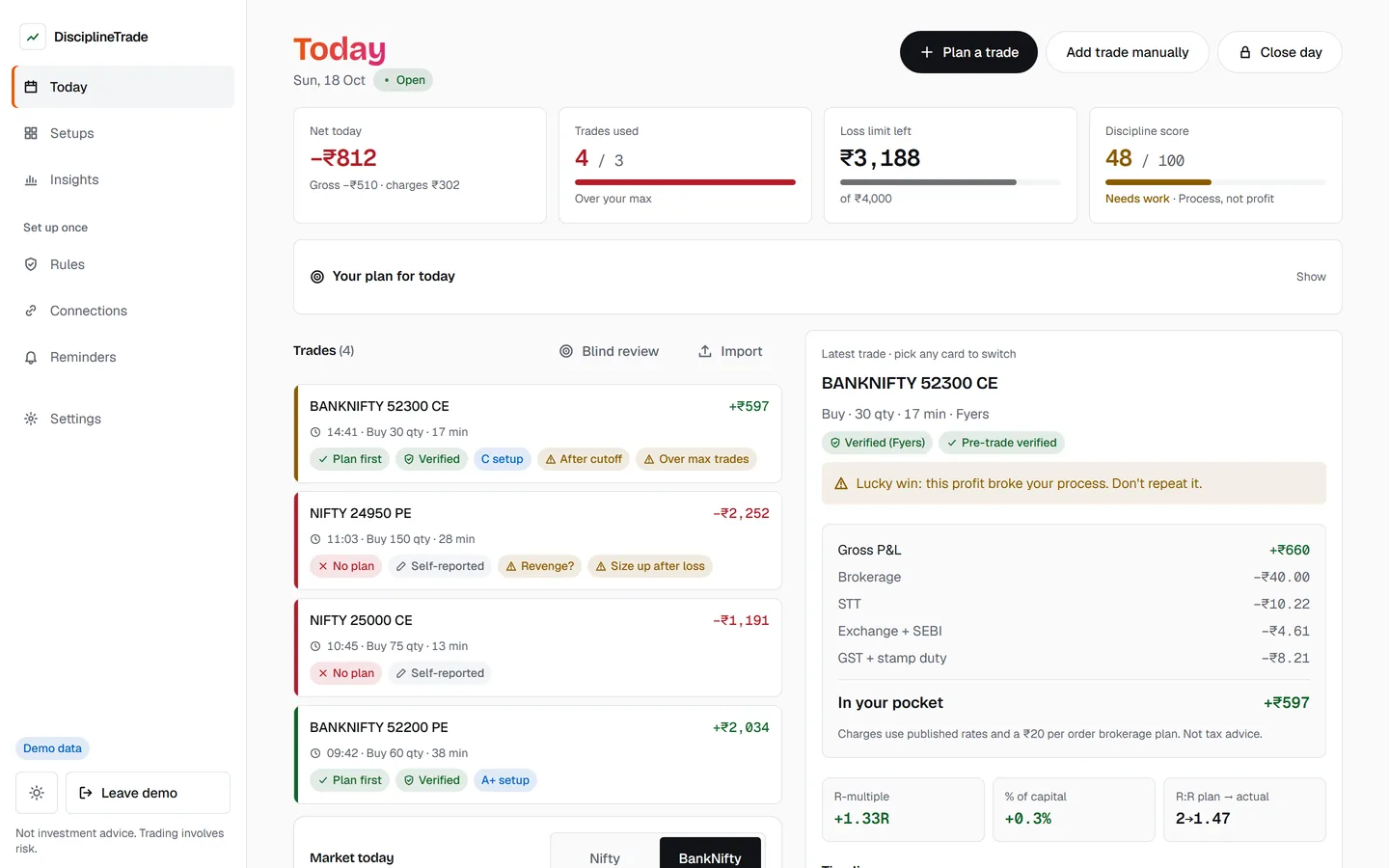
Discipline score
Needs workRules kept, trades planned, no revenge. Profit never adds a point.
Free trading journal for stocks, futures and options
DisciplineTrade puts your own rules in front of you before the market opens, flags revenge trades as they happen and scores your discipline. Never your profit.
No card needed. Read-only broker access. We never place orders.
Price runs into resistance, the urge to take a fourth trade arrives, and your own rule is already on screen. That is the whole idea.
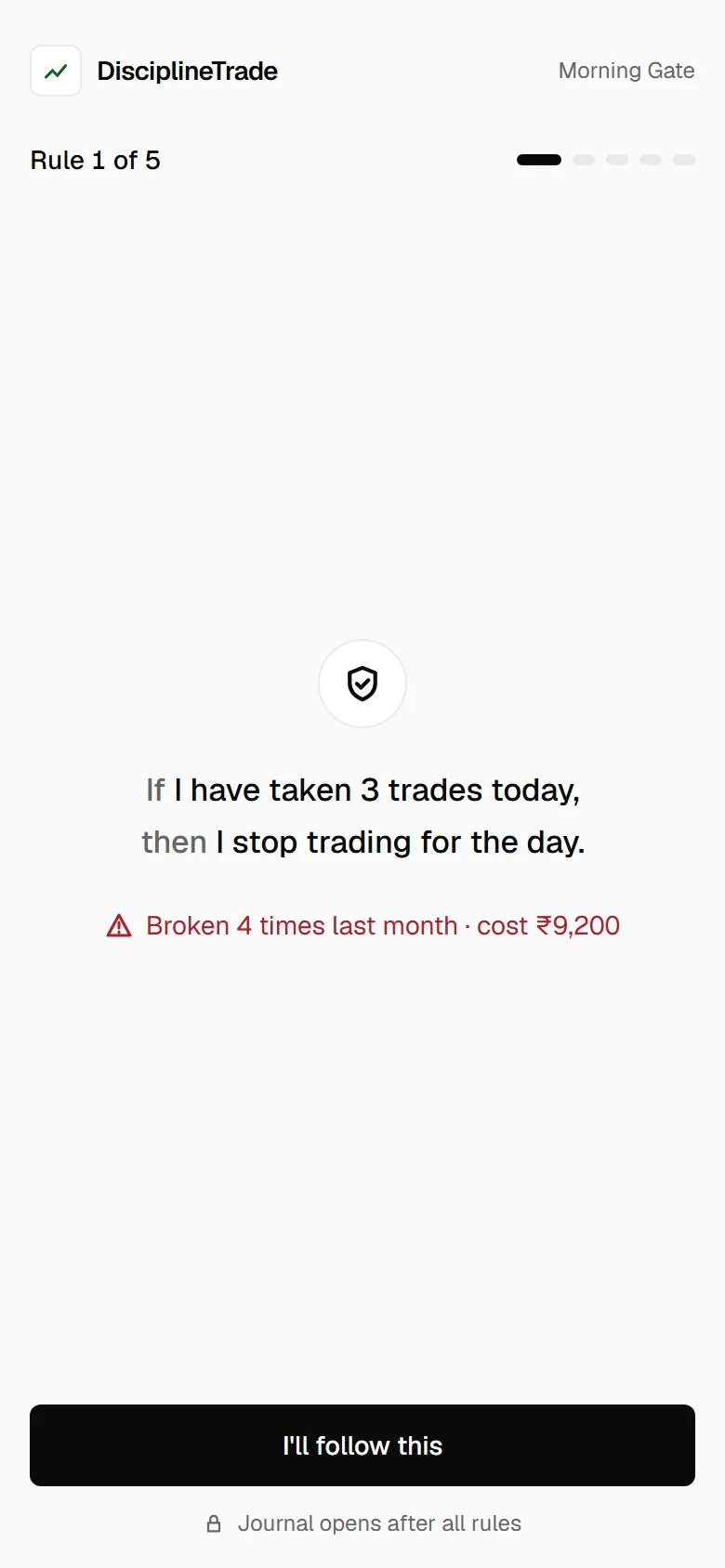
Rule 2 of 5
If I have taken 3 trades today, then I stop for the day.
Broken 4 times last month. Cost ₹9,200.
I'll follow thisImport your tradebook or add trades by hand. Every trade is checked against your rules: no plan, revenge after a loss, bigger size after a loss, trades after your cutoff. A win that broke your rules is marked as luck.
See every behaviour flagNeeds workRules kept, trades planned, no revenge. Profit never adds a point.
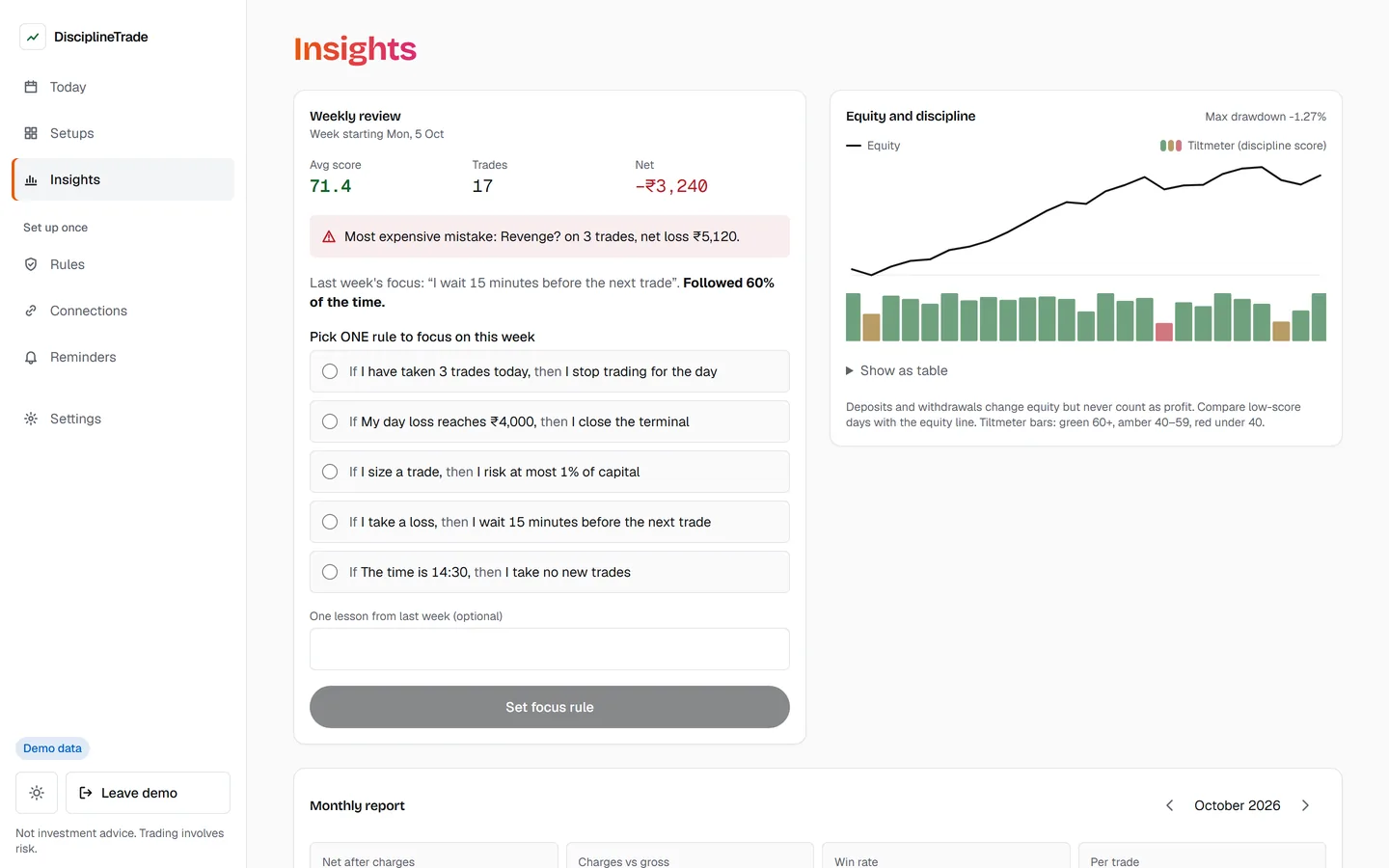
Green 60 and above, amber 40 to 59, red under 40. Low days usually line up with the drawdowns.
Illustrative demo numbers.
09:05
A quick check-in, then each of your rules on its own card. The journal opens after the last one.
Before entry
Reason, stop, target and setup checklist, saved with a server timestamp before you click buy.
During the day
Revenge trades, sizing up after a loss, trades after your cutoff. Flagged as they happen, never a trade call.
15:45
Net after every charge, a lesson, tomorrow's plan. The day locks, so hindsight cannot rewrite it.
Real screens from the app with demo data. No mock-ups.
That is SEBI's own finding, published in September 2024. A journal cannot change the market. It can change what you do after a loss, how many trades you take and whether you see the real cost of each one.
A discipline journal records whether you followed your own process, not just whether a trade made money. It captures the reason for a trade before the outcome is known, checks each trade against your rules and scores the day on process. The aim is fewer avoidable mistakes, not more trades.
| Question | Profit-only journal | Discipline journal |
|---|---|---|
| When is the reason written? | Often after the trade | Before entry, timestamped |
| What is scored? | P&L | Rules followed and planning, not P&L |
| Lucky wins | Look like skill | Labelled when rules were broken |
| Past entries | Editable | Locked, with dated notes |
The Morning Gate is a short routine before the market opens: a quick check-in, then each of your if-then rules on its own card. The journal opens after the last card. Re-reading your own rules every day is what makes them stick.
You write your plan and the reason for the trade before you enter. The plan gets a server timestamp. If your broker's entry time is later than that timestamp, the trade is marked pre-trade verified, so your reasons cannot be rewritten with hindsight.
Closing the day locks what you wrote, so later knowledge of the outcome cannot change it. You can still add dated notes under the original entry.
The score from 0 to 100 measures process: finishing the Morning Gate on time, following your rules, planning trades before entry and avoiding behaviours like revenge trades. Profit never raises it, so a day with no trades and no broken rules can score 100.
No. Broker connections use read-only data such as your tradebook. The app never places, changes or cancels orders.
At minimum: the instrument, side, size, entry and exit, the reason written before entry, the stop and target, charges, and how you felt. Tracking whether you followed your own rules matters as much as profit or loss.
Yes. You can upload a Zerodha tradebook or a CSV/XLSX file from other brokers and match its columns once. Imported trades are labelled self-reported.
Free, in the browser on phone and desktop. No card needed.